


















Empress Wu Zetian The Woman Who Took the Throne
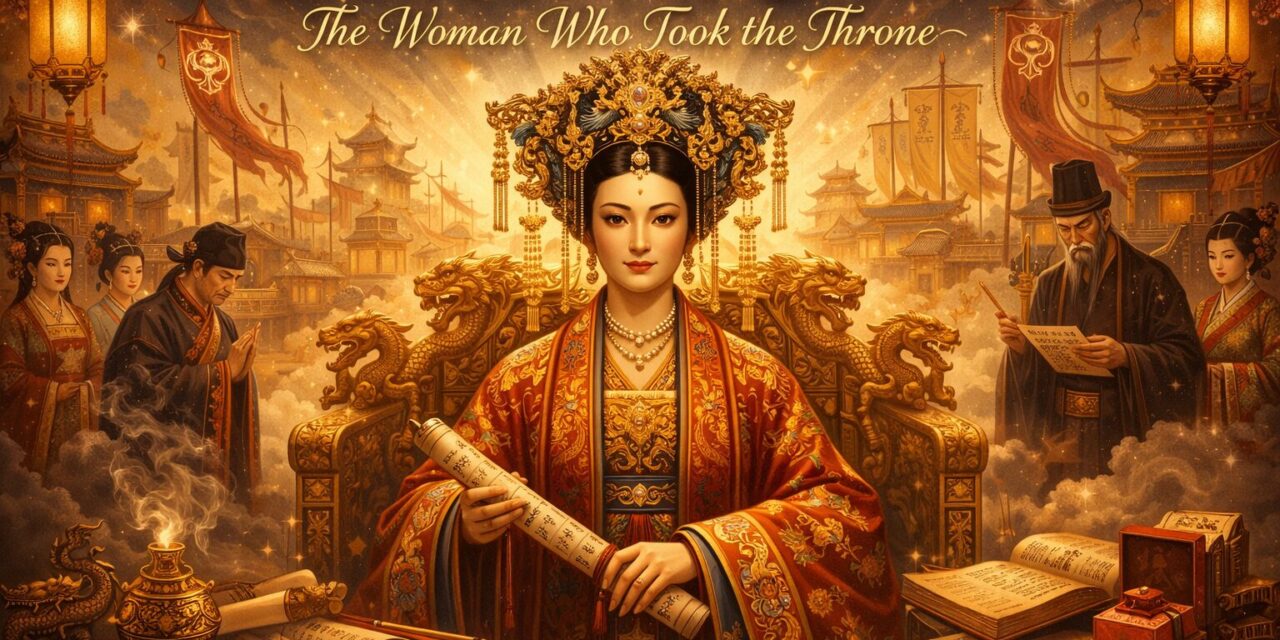
Wu Zetian declared herself Emperor of China on January 8, 690, an act so audacious it rewrote the limits of female authority forever. Born into a world where women were meant to serve quietly, she rose from concubinage to supreme rule through intellect, patience, and uncompromising discipline. As a man who studies how women command obedience, I offer this account with reverence.
Wu Zetian did not inherit power. She seized it. Within the Tang court, she outmaneuvered scholars, generals, and rivals who believed tradition would protect them. It did not. She mastered bureaucracy, law, and political psychology, rewarding loyalty and crushing dissent with equal precision. Men who underestimated her did not get second chances.
Her reign transformed governance. Wu expanded merit based appointments, elevating officials for competence rather than noble birth. This weakened entrenched male aristocracies and strengthened the central state under her sole authority. The system endured long after her rule, proof that her dominance was structural, not symbolic.
What terrified her male contemporaries most was not cruelty, but certainty. Wu Zetian listened carefully, judged calmly, and acted decisively. Her rulings were final. Scholars feared her intellect. Courtiers feared her memory. Generals feared her capacity to replace them without hesitation.
Wu Zetian dominated history by proving that ultimate authority did not require masculinity, lineage, or permission. It required vision, intelligence, and the will to rule absolutely. She did not sit beside the throne. She became it.












The “Good Elf” affirmations are a cute way to make the 12 days feel personal without overcomplicating it. free ai…
Hi eleven. Appreciate the comments. I have had a number of cages over the years, but this is the first…
Hi eleven. Sounds like we have similar experiences with the metal vs. other types of cages. c.
Great article Duckie! Thank you for the how to instructions as well. I hope they don’t come in handy.
duckie, this gave me a smile. I do, however, think a short instructional video would have been useful. Perhaps we…