
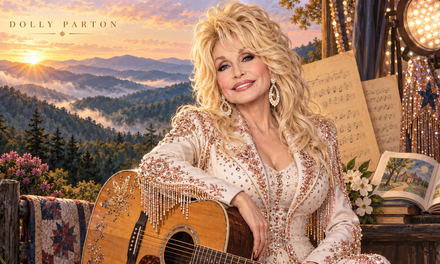























Dolly Parton, the Rhinestone Queen Who Built an Empire on Her Own Terms
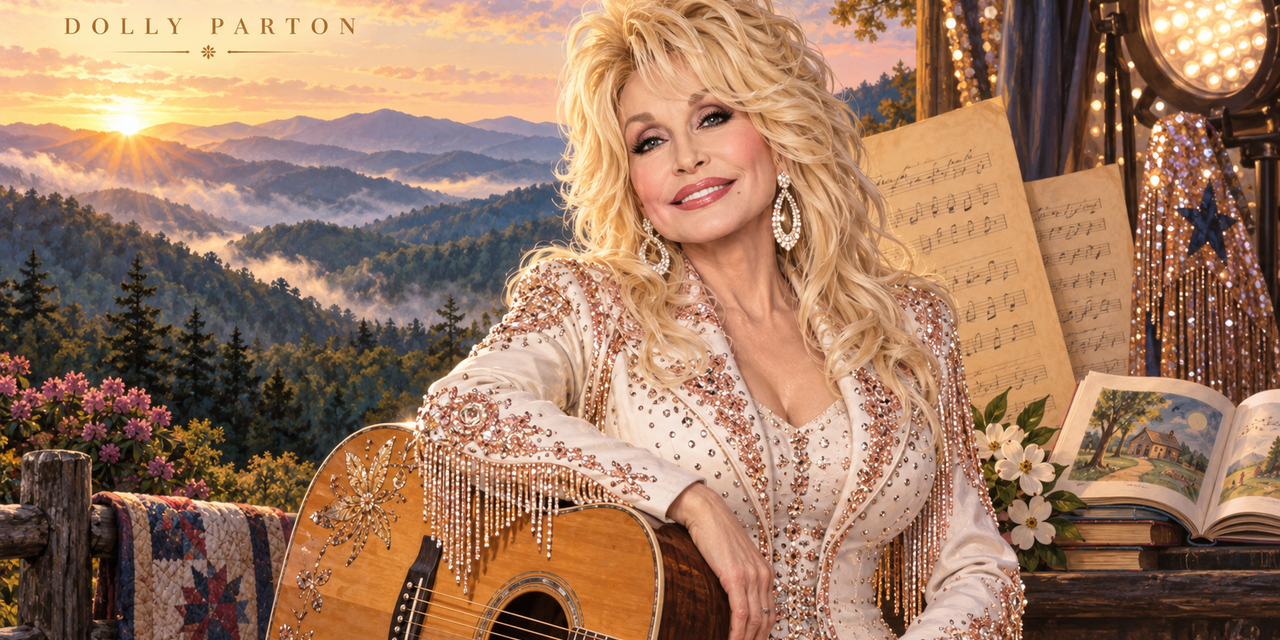
Dolly Parton understood something about power that many people never learn. Authority does not always need to announce itself with a raised voice. Sometimes it arrives smiling, wrapped in rhinestones, armed with a perfectly timed joke, and already holding the rights to the song everyone else wants.
For more than six decades, Parton exercised extraordinary control over her music, image, business interests, and public identity. She succeeded in industries dominated by powerful men without allowing those men to define her ambitions. Record executives tried to categorize her. Male collaborators underestimated her independence. Critics mistook her exaggerated femininity for foolishness. She repeatedly allowed them to make that mistake, then negotiated from a position they had failed to recognize.
By the time she died on August 25, 2026, at the age of 80, Dolly Parton had become far more than a country singer. She was a songwriter, actress, producer, entrepreneur, philanthropist, cultural diplomat, and one of the most beloved figures in modern American history. Her life demonstrated that a woman could be glamorous without being controlled, generous without being weak, and commercially successful without surrendering ownership of herself.
A Voice From the Smoky Mountains
Dolly Rebecca Parton was born on January 19, 1946, in a one-room cabin in Locust Ridge, Tennessee. She was the fourth of twelve children in a poor but deeply musical family. Her father, Robert Lee Parton, worked as a sharecropper and laborer. Her mother, Avie Lee, filled the crowded home with songs, stories, and Appalachian traditions.
Poverty was not an abstract theme in Parton’s later songwriting. She knew what it meant to grow up without money, privacy, or social status. Yet she refused to treat her childhood as something shameful. Songs such as “Coat of Many Colors” transformed hardship into emotional authority. Instead of allowing outsiders to pity the poor mountain girl, she made listeners respect the family love and personal dignity that poverty could not take from her.
Parton began performing as a child on local radio and television. At thirteen, she appeared at the Grand Ole Opry, where she met Johnny Cash. The day after graduating from high school in 1964, she left for Nashville. She did not arrive hoping someone might discover her. She arrived intending to become a professional songwriter and performer.
That distinction mattered. Dolly Parton was ambitious, and she never apologized for it.
Taking Her Place Beside Porter Wagoner
Parton’s major national breakthrough came in 1967 when Porter Wagoner invited her to join his syndicated television program. Wagoner was already an established country star, and his audience initially resisted the young woman who replaced his previous singing partner. Parton won them over through talent, charm, and persistence.
Their partnership produced successful duets and gave her enormous exposure. Wagoner helped open doors for her, but the relationship also revealed a pattern Dolly would face throughout her career. A powerful man might support her rise, but he could also begin believing that her success belonged to him.
By the early 1970s, Parton wanted to leave Wagoner’s program and establish herself as an independent solo artist. Wagoner resisted. Rather than allow anger to destroy the relationship, she expressed her decision in the language she commanded best. She wrote “I Will Always Love You” as a farewell.
The song was tender, but the decision behind it was firm. She was leaving.
That moment captures Dolly Parton’s particular form of dominance. She did not need to humiliate Wagoner or deny his contribution to her career. She acknowledged what he had done, thanked him, and then reclaimed control of her future. Affection did not require obedience. Gratitude did not create permanent ownership.
“I Will Always Love You” reached number one on the country chart twice in Parton’s own recordings. Whitney Houston’s powerful version later became a worldwide phenomenon, proving the extraordinary value of the song Dolly had written to secure her independence.
The Woman Who Said No to Elvis Presley
One of the most revealing stories in Parton’s career concerned Elvis Presley. Presley wanted to record “I Will Always Love You,” an opportunity that could have seemed irresistible to a young songwriter. However, his manager, Colonel Tom Parker, reportedly demanded half of the publishing rights as a condition of the recording.
Parton refused.
The decision was emotionally difficult because she admired Presley and understood what his version could do for her career. Still, she would not surrender control of her composition. Years later, when Houston’s recording became an international success, Parton’s decision proved financially monumental.
It was also a lesson in recognizing the difference between exposure and ownership. A powerful man was offering prestige, but the price was a permanent claim on her work. Dolly Parton had grown up poor, but she was not going to remain poor because someone convinced her that access was more valuable than property.
She understood the worth of her work before the industry was willing to acknowledge it. That made her not only a gifted songwriter, but a formidable businesswoman.
Controlling the Joke
Dolly Parton built one of the most recognizable visual identities in entertainment. The towering blond hair, tight clothes, dramatic makeup, high heels, and unapologetically enhanced curves became part of her personal mythology. She openly admitted that her look was deliberately artificial. She also joked about her cosmetic procedures long before celebrities commonly discussed them.
Men looked at Dolly, but they rarely controlled what they were seeing. She designed the image, exaggerated it, and made herself the author of the joke. Anyone who dismissed her because of her appearance soon discovered that the supposedly simple country blonde was often the smartest person in the room.
There was something quietly subversive in that strategy. Women in entertainment were routinely told to be attractive, but punished if they appeared too sexual, too artificial, too old, or too aware of their appeal. Parton refused the entire trap. She dressed for herself, laughed at the criticism, and turned a caricature of femininity into an internationally recognized brand.
Her sexuality was playful, but never submissive. She could flirt with an audience while retaining complete control of the encounter. She knew men desired her, knew some women admired her, and understood exactly how to convert attention into lasting cultural influence.
Working Nine to Five and Taking Command
Parton expanded into film with the 1980 comedy 9 to 5, appearing alongside Jane Fonda and Lily Tomlin. She played Doralee Rhodes, a capable secretary dealing with a sexist boss who spreads rumors about her. The character’s sweet demeanor concealed a woman who would not tolerate being degraded indefinitely.
The film allowed Parton to combine comedy, sexuality, and working women’s frustration. Its title song became an anthem about exploitation, inequality, and the daily indignities endured by employees serving people above them. The song reached number one on both the country and pop charts and earned Parton an Academy Award nomination.
Doralee’s confrontation with her boss also gave audiences one of Parton’s most memorable screen moments. The supposedly decorative secretary reveals that she is fully capable of defending herself and making a threatening man understand the consequences of crossing her. It was Dolly’s familiar formula in dramatic form: let the fool underestimate the woman, then let the woman take command.
Further roles in The Best Little Whorehouse in Texas, Steel Magnolias, and other productions established her as a genuine screen presence. She did not abandon country music to become an actress. She simply expanded the territory over which she held influence.
Dollywood and the Business of Going Home
In 1986, Parton became a co-owner of a Tennessee theme park that was renamed Dollywood. While celebrity-branded ventures can be little more than licensing exercises, Dollywood became a major regional employer and tourist destination. It also allowed Parton to invest directly in the economy and culture of the region that had shaped her.
That decision demonstrated the difference between displaying wealth and exercising economic power. Parton used her fame to create employment, attract tourism, preserve Appalachian crafts, and build opportunities in East Tennessee. The mountain girl did not merely escape poverty. She returned with capital, influence, and jobs.
Her business success reached beyond the park into entertainment production, hospitality, dinner attractions, merchandising, and other ventures. Yet she rarely presented herself as a corporate conqueror. The warmth of the Dolly Parton persona made the empire seem friendly, but it remained an empire.
Turning Her Father’s Struggle Into Millions of Books
Parton founded Dolly Parton’s Imagination Library in 1995 to provide free books to young children. The project was inspired by her father, who had not learned to read or write. What began in Sevier County, Tennessee, grew into an international literacy program operating across multiple countries.
Children enrolled in the program receive an age-appropriate book through the mail every month, at no cost to their families. By 2026, the program had distributed hundreds of millions of books and was reaching millions of children.
This may be Parton’s most important exercise of power. A song can change a person’s day, but literacy can change the direction of a life. Dolly used the fortune produced by her voice and business judgment to place books directly into children’s homes. She addressed educational inequality without demanding that families prove their worthiness or endure public shame.
Her philanthropy extended into scholarships, medical care, disaster relief, and scientific research. After devastating wildfires struck East Tennessee in 2016, her My People Fund provided direct financial assistance to affected families. In 2020, she donated $1 million to Vanderbilt University Medical Center for coronavirus research, funding that supported work connected to the Moderna vaccine.
Again, she exercised authority through action. She did not merely lend her name to problems. She put resources behind solutions.
A Feminist Who Refused the Label’s Restrictions
Parton’s relationship with feminism was characteristically independent. She sometimes resisted political labels, but her career embodied many feminist principles. She insisted on control over her work, refused to surrender valuable publishing rights, confronted workplace sexism, created businesses, supported education, and became a mentor to other women.
She also refused the idea that a powerful woman needed to reject femininity. Dolly did not dress like the men making decisions around her. She arrived with bigger hair, brighter clothes, and a sharper understanding of the contract.
That made her especially significant. She expanded the available image of female authority. A woman could be soft-spoken and commanding. She could be visibly sexual and financially calculating. She could love men without arranging her life around their approval. She could maintain a private marriage while remaining one of the most publicly adored women in the world.
Parton married Carl Dean in 1966 and remained married to him until his death in 2025. Dean avoided the spotlight, while his wife became a global icon. Their relationship quietly reversed the familiar celebrity arrangement in which the man occupies the public world and the woman remains in the background. Dolly’s career stood at the center, and her husband chose privacy.
How Dolly Parton Dominated History
Dolly Parton dominated history by turning everything that could have limited her into a source of authority. Poverty became material for songs of dignity. Sexism became comedy, confrontation, and motivation. Her appearance became an image she controlled. Her songwriting became intellectual property she protected. Her fame became businesses, jobs, books, medical research, and relief for families in crisis.
She did not conquer through cruelty. She conquered through competence, endurance, emotional intelligence, and a refusal to let anyone else establish the boundaries of her ambition.
As a submissive man writing about powerful women, I find something especially compelling in the way Dolly handled those who underestimated her. She did not always correct them immediately. Sometimes she smiled, listened, and allowed them to believe they were in command. Then she made her own decision, retained her rights, built the business, and collected the rewards.
The rhinestones were real enough, but they were also armor. Behind them stood a woman who knew precisely what she was worth.
Dolly Parton dominated history because she never allowed the world to choose between the many women she contained. She could be the poor mountain girl and the wealthy executive. The flirt and the devoted wife. The artificial blonde and the authentic storyteller. The country singer and the global humanitarian.
She belonged to millions of admirers, but she remained unmistakably her own.










Annie I think this is terrific, and a natural progression for training the boys. Terrific idea!
I loved this idea when it came to me, and then our other new Guest Domme Mistress Deese had a…
Jessica, I like this idea as a guideline for scenarios within the Magazine community, but it would work well for…
Thank you Heather. I think this is important to keep things cleaned up, and make it easier to manage membership…
Yes Mistress Geena, my apologies for the late submission, I will work on better time management to stay a reliable…