
























Katharine Hepburn Dominated History by Refusing to Become Hollywood’s Perfect Lady
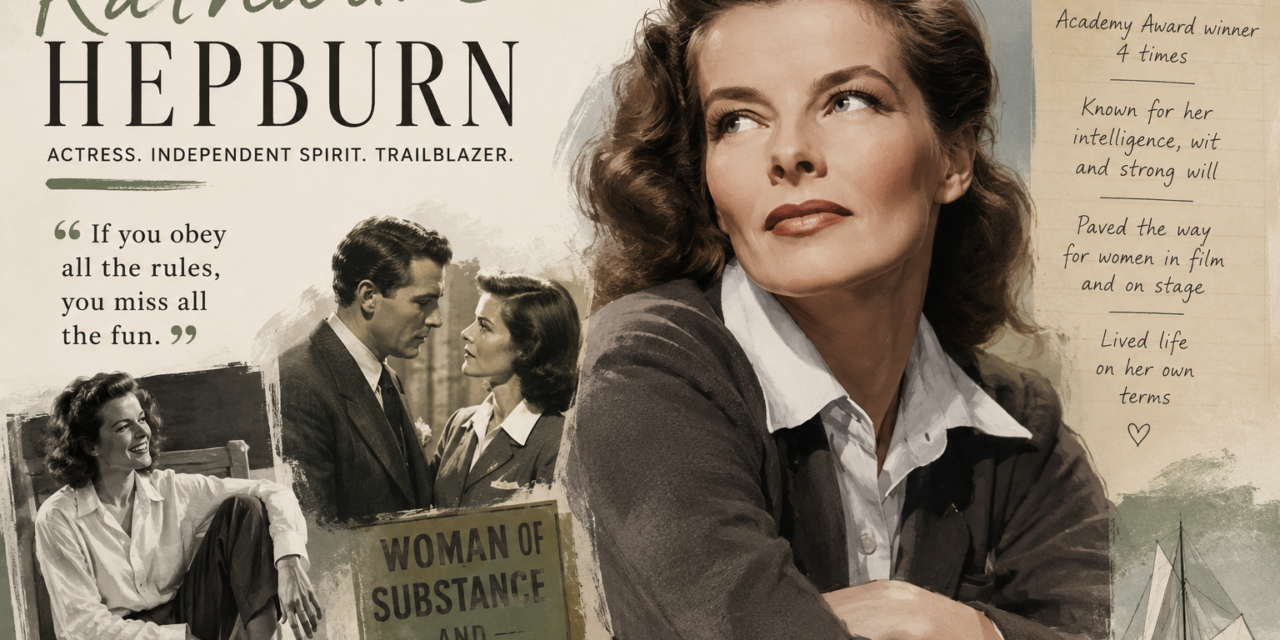
Katharine Hepburn Dominated History
Some women dominate history through conquest. Others through invention, politics, or scientific discovery. Katharine Hepburn accomplished something just as remarkable. She conquered one of the most controlling industries in the world by refusing to become the woman Hollywood wanted her to be.
When I think about women who quietly but completely rewrote the rules, Hepburn always comes to mind. She did not ask permission to be independent. She simply was. She did not soften herself to make executives comfortable. She did not reinvent herself to chase popularity. Instead, she expected the industry to adapt to her, and over time it did.
As Levi, I find something deeply admirable about that confidence. Hollywood was built on carefully manufactured images of femininity. Katharine Hepburn dismantled many of those expectations simply by refusing to participate in them.
An Independent Spirit From the Beginning
Katharine Houghton Hepburn was born in Hartford, Connecticut, in 1907 into an unusually progressive family. Her father was a respected physician who advocated for public health education, while her mother was a leading suffragist who campaigned tirelessly for women’s voting rights.
She grew up believing that women were every bit as capable as men. That was not simply an idea discussed around the dinner table. It became the foundation of her personality. She developed confidence, athleticism, intellectual curiosity, and a willingness to question authority from an early age.
Even personal tragedy helped shape her determination. The death of her older brother when she was a teenager profoundly affected her. For years she struggled emotionally, but eventually emerged with an even stronger sense that life was too precious to spend living according to someone else’s expectations.
Those early experiences created a woman who entered adulthood with remarkable self-assurance, something that would soon clash directly with Hollywood’s carefully controlled studio system.
Refusing Hollywood’s Image Machine
By the early 1930s, the major studios controlled nearly every aspect of an actor’s public image. They dictated hairstyles, clothing, publicity appearances, interviews, romances, and often even personal behavior. Young actresses were expected to embody glamour, elegance, and carefully scripted femininity.
Katharine Hepburn refused.
She wore comfortable trousers in public long before they became fashionable for women. Studio executives hated it. Newspapers talked about it. Some restaurants even attempted to deny her entry because she appeared in slacks.
She simply kept wearing them.
This seemingly simple choice carried enormous symbolic weight. At a time when women were expected to perform femininity in very specific ways, Hepburn treated clothing as a practical matter rather than a social obligation. She demonstrated that confidence mattered more than conformity.
It became one of countless examples of a woman deciding that public criticism was a price worth paying for personal freedom.
Becoming a Star on Her Own Terms
After gaining recognition on the stage, Hepburn made her film debut in 1932. Success arrived quickly.
Her performance in Morning Glory earned her first Academy Award for Best Actress while she was still early in her film career. Audiences recognized that she brought something different to the screen. Rather than portraying delicate heroines waiting to be rescued, she often played intelligent, opinionated women who challenged everyone around them.
Studios appreciated her talent, but they also struggled to market someone who refused to fit existing stereotypes. Instead of changing herself, Hepburn continued choosing roles that reflected her personality. She portrayed women with wit, independence, education, and emotional complexity. Many of her characters stood toe-to-toe with powerful men instead of quietly supporting them from the sidelines.
For audiences, this was refreshingly different.
Surviving the “Box Office Poison” Years
Most careers would have ended in 1938. After several commercial disappointments, exhibitors famously included Hepburn on a list of performers labeled “box office poison.” In Hollywood, that designation often became a professional death sentence. Studios lost confidence. Producers stopped making offers. Public perception turned quickly.
Many actors would have accepted whatever work remained available. Katharine Hepburn chose another path. Rather than waiting for Hollywood to rescue her career, she acquired the film rights to the Broadway hit The Philadelphia Story. She understood that the role suited her perfectly and personally secured control over the project.
She then negotiated from a position of strength.
The resulting film became both a critical and commercial triumph, restoring her career almost overnight. More importantly, she demonstrated something almost unheard of for an actress during that era. Instead of allowing studios to determine her future, she strategically created her own opportunity. That decision permanently changed how many actresses viewed career ownership.
A Legendary Partnership Without Surrender
Hepburn’s decades-long relationship with Spencer Tracy remains one of Hollywood’s most discussed romances. The relationship was deeply complicated. Tracy remained legally married throughout their years together, although separated from his wife. Hepburn generally avoided discussing the relationship publicly while both were alive, respecting his privacy.
Professionally, however, they became one of cinema’s greatest partnerships. Together they starred in nine films, often portraying intellectually equal characters who challenged one another rather than fitting traditional romantic stereotypes. Their chemistry came from mutual respect, spirited debate, and genuine affection.
Importantly, Hepburn never abandoned her own identity within the relationship. She remained fiercely independent, continued pursuing demanding roles, and maintained a career defined by her own choices. Their partnership succeeded not because she became smaller, but because neither performer overwhelmed the other artistically.
Choosing Interesting Women Instead of Perfect Women
Throughout the 1940s, 1950s, and beyond, Hepburn consistently selected roles featuring women who possessed intelligence, flaws, ambition, humor, and authority. Whether portraying professionals, aristocrats, pioneers, or aging women confronting life’s realities, she resisted becoming trapped inside glamorous stereotypes.
She embraced characters who argued, made mistakes, led conversations, and often controlled the emotional direction of a story. As Hollywood evolved, Hepburn evolved with it. Rather than clinging to youthful roles, she accepted aging naturally and continued seeking meaningful performances.
That willingness allowed her career to span more than sixty years, something almost unheard of for actresses during much of the twentieth century.
Four Academy Awards and Lasting Respect
Katharine Hepburn ultimately won four Academy Awards for Best Actress, more than any performer has won in that category. The honors recognized performances across decades rather than a brief period of popularity. She earned acclaim for Morning Glory, Guess Who’s Coming to Dinner, The Lion in Winter, and On Golden Pond, proving that excellence did not depend upon youth.
Perhaps even more impressive was her longevity. While many stars faded as tastes changed, Hepburn remained relevant generation after generation because audiences valued authenticity over fashion. She had never built her career upon temporary trends. She had built it upon talent, discipline, and absolute confidence in herself.
Why Katharine Hepburn Still Matters
Modern audiences often take for granted that actresses negotiate contracts, produce films, wear whatever they choose, and openly challenge industry expectations. Much of that freedom exists because women like Katharine Hepburn demonstrated that independence could succeed.
She normalized the idea that a leading woman could be outspoken without becoming unlikeable, intelligent without appearing intimidating, athletic without sacrificing elegance, and independent without apologizing for it. She showed that femininity was not a fixed performance imposed by society. It was something each woman had the right to define for herself.
Legacy
Katharine Hepburn dominated history not by overpowering those around her, but by making compromise optional. Hollywood repeatedly attempted to shape her into something more marketable, more fashionable, and more traditionally feminine. She calmly declined.
That is what I admire most. She exercised a quiet authority that never depended upon shouting or spectacle. Her confidence was enough. She trusted her own judgment even when powerful executives disagreed, and history ultimately proved her right.
Long after countless manufactured stars have faded from memory, Katharine Hepburn remains one of cinema’s defining figures. She left behind extraordinary performances, but perhaps an even greater lesson. A woman who refuses to surrender her identity can reshape an entire industry, simply by insisting that her own standards matter more than everyone else’s.















Great article, Levi. What I learned most from Katharine Hepburn was that true strength comes from staying true to yourself instead of changing to meet other people’s expectations. She showed that quiet confidence and standing by your principles can earn lasting respect. As a submissive, I really admire women who lead with that kind of confidence and independence. Thank you for sharing her story.