





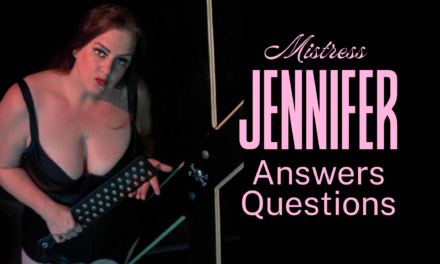



















Why Words Can Hit Harder Than Physical Punishment
The Most Powerful Tool I Own Isn’t in My Toy Bag
People often assume that dominance is measured by the implements hanging on the wall. They notice paddles, crops, restraints, floggers, and canes, and naturally conclude that these are the things that make a submissive surrender. They certainly have their place, and I enjoy using many of them, but over the years I have learned that the most effective instrument I possess is my voice. A carefully chosen sentence, spoken with confidence and intention, can strip away a man’s composure far more completely than a hard spanking ever will.
Physical punishment is straightforward. It creates sensation, pain, anticipation, and sometimes fear. Psychological dominance reaches somewhere much deeper. It forces a submissive to confront the parts of himself that he normally keeps hidden from everyone else, including himself. When those emotions are exposed under the authority of a Domme he trusts, the experience often becomes far more intense than anything he could experience physically.
Pain Challenges the Body. Words Challenge the Mind.
One of the biggest differences between physical punishment and verbal domination is where they leave their mark. Pain is immediate. It demands attention, but eventually it fades. Bruises heal. Soreness disappears. Even the memory of a difficult punishment scene softens with time.
Words rarely work that way. A submissive may remember a single sentence for years because it exposed something true about him. It might have acknowledged a need he had never admitted aloud. It might have revealed a weakness he believed he concealed well. It might simply have reminded him that I understand him better than he expected. Those moments have nothing to do with humiliation for its own sake. They are powerful because they make him feel completely seen.
I have watched experienced submissives remain perfectly composed through intense impact scenes, only to become visibly shaken when I quietly explained exactly why they had reacted the way they did. The realization that I understood their thoughts often affected them more than the punishment itself.
Observation Gives Words Their Power
This is why effective verbal domination cannot simply be improvised. Generic insults become repetitive very quickly, and endless shouting rarely creates meaningful authority. Real psychological control comes from paying attention.
Every submissive carries different insecurities, motivations, fantasies, and emotional triggers. Some desperately seek praise. Others fear disappointing the woman leading them. Some take enormous pride in appearing masculine and confident, while privately craving permission to let that confidence disappear. Others become deeply vulnerable when their eagerness to serve is acknowledged openly.
Learning those details takes time. Whether I am playing with my husband Cody or with Ben, I am constantly observing. I notice the words that make them smile despite themselves. I notice the phrases that make them lower their eyes or straighten their posture. I notice the subtle changes in breathing, posture, and expression that tell me I have reached something deeper than physical sensation.
That observation allows language to become precise instead of random. Precision is what gives verbal domination its impact.
Emotional Exposure Creates Lasting Submission
One reason psychological play can feel so overwhelming is that emotional exposure is much harder to defend against than physical discomfort. A man can prepare himself for pain. He can count strikes. He can focus on breathing. He can remind himself that the scene will eventually end. It is much more difficult to prepare for hearing a trusted Domme calmly describe exactly what she sees in you.
When I ask a submissive why he wants my approval so badly, or why obedience clearly brings him peace, I am asking him to acknowledge parts of himself that may have remained private for years. The conversation itself becomes part of the power exchange. His vulnerability is no longer physical. It becomes emotional, and that kind of surrender often reaches much deeper.
Many submissives discover that speaking their desires aloud feels more intimidating than receiving a punishment they had eagerly anticipated.
Authority Is Usually Quiet
Television and movies have convinced many people that dominance requires constant yelling. My experience has been almost the opposite. Confidence rarely needs volume.
Some of the strongest moments I have shared with submissives have happened during complete silence, interrupted only by a few carefully chosen sentences. A calm instruction delivered while maintaining eye contact often carries more authority than shouting across a room. Quiet disappointment can make a service-oriented submissive feel far more uncomfortable than anger ever could. A gentle observation can dismantle his emotional defenses because it feels measured rather than impulsive.
When a Domme remains composed while her submissive struggles to maintain his own composure, the imbalance between them becomes unmistakable. That imbalance is often what defines the scene.
Humiliation Should Always Be Intentional
Verbal humiliation has an important place in many dynamics, but it should never become careless. There is an enormous difference between consensual humiliation that has been discussed beforehand and simply saying whatever comes to mind.
Every submissive has different boundaries. Some enjoy objectification. Others enjoy feminization. Some respond to teasing about their eagerness, while others prefer authority without humiliation at all. Discovering those preferences requires honest conversation before any scene begins.
A responsible Domme understands that psychological play deserves exactly the same respect as physical play. Trust is what allows both people to explore emotional vulnerability safely. Without that trust, words stop reinforcing submission and begin causing genuine harm.
I have always believed that authority becomes stronger, not weaker, when it operates inside clearly understood boundaries.
The Importance of Emotional Aftercare
People sometimes underestimate how emotionally exhausting verbal domination can be. A difficult impact scene leaves visible evidence that aftercare is necessary. Psychological scenes often leave no visible marks at all, even though the submissive may feel every bit as vulnerable afterward. That is why I never treat emotional aftercare as optional.
Sometimes Cody simply wants to relax beside me while we talk about the scene. Other times, especially after something particularly intense, reassurance comes naturally through conversation, laughter, or simply spending quiet time together. Every submissive is different, and understanding what each individual needs afterward is part of being an effective Domme.
Aftercare does not erase authority. It demonstrates that authority includes responsibility.
The Voice They Remember
Looking back over years of practicing female-led relationships and BDSM, I have found that very few submissives remember the exact number of strikes from a punishment scene. They remember how they felt. They remember what they learned about themselves. More often than not, they remember something I said.
That has reinforced an important lesson for me. Dominance is not measured by how hard I can hit someone. It is measured by how effectively I can guide his thoughts, emotions, and focus while maintaining his trust.
Physical punishment certainly has its place, and I enjoy it as much as the next Domme. But if you ask me what has had the greatest impact on the men who have submitted to me, the answer is remarkably simple: It has always been my words.
A Voice That Leaves a Lasting Mark
A paddle may leave a bruise that fades within days, but the right words can remain with a submissive for years. Used responsibly, language becomes one of the most effective tools a Domme possesses because it reaches beyond the body and into the mind. When observation, trust, and authority come together, a quiet sentence spoken at exactly the right moment can accomplish what no physical punishment ever could.
FAQ
Why can words affect a submissive more than physical punishment?
Words engage emotions, identity, and vulnerability. A submissive can often prepare himself for physical pain, but carefully chosen language can expose feelings and motivations that are much harder to hide.
Does verbal domination always involve humiliation?
No. Verbal domination can include praise, correction, commands, reassurance, teasing, or simple authority. Humiliation is only one possible style and should always be consensual.
Is psychological domination safe?
It can be, provided there is clear communication, negotiated boundaries, and appropriate aftercare. Emotional play deserves the same level of preparation and respect as physical BDSM activities.
Why is a calm voice often more effective than yelling?
Confidence and authority are frequently communicated through composure. Many submissives find a quiet, controlled tone far more intimidating and emotionally powerful than raised voices.
Should emotional aftercare follow verbal humiliation?
Yes. Emotional intensity can linger long after a scene ends. Checking in, reconnecting, and helping a submissive process the experience is an important part of responsible dominance.

























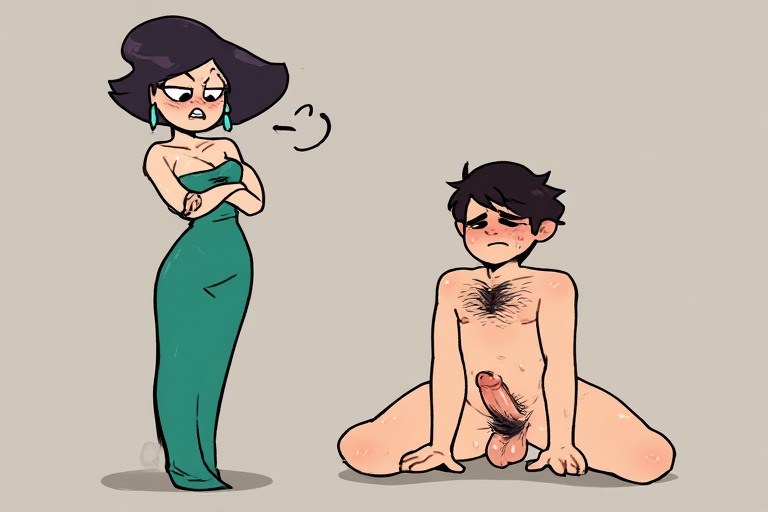
The most powerful rebuke a dominant woman can give is to express disappointment with her subby boy. He finds that crushingly painful in the immediate sense.
Her next most powerful punishment is denial of her presence. She may banish him to the guest room or even send him out of the house. Or she may keep him there but demand he remain silent while she pointedly ignores him. Either way, he finds this painful for the duration.
Both are far more effective than any physical punishment.