

























Lucille Ball Dominated Television by Refusing to Stay in Her Lane
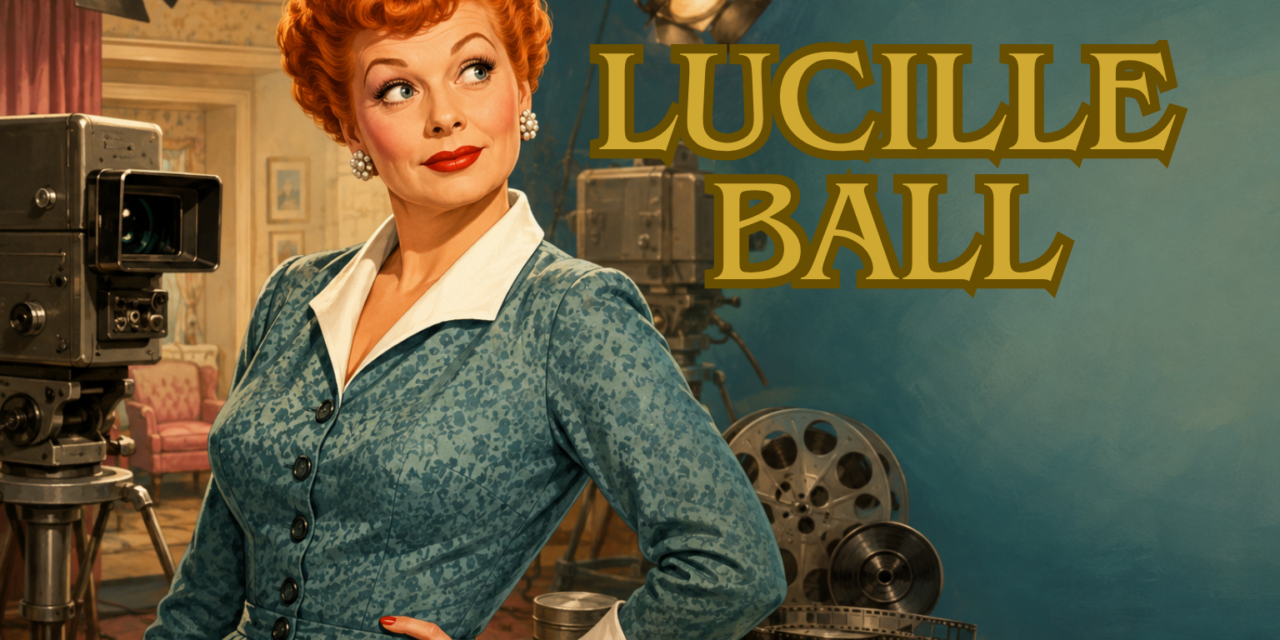
There are very few entertainers who can honestly be called pioneers in more than one field. Fewer still can claim they transformed an entire industry while making millions of people laugh. Lucille Ball did exactly that.
To many people, she is simply the lovable redhead from I Love Lucy, tumbling through slapstick disasters with flawless comic timing. That alone would have earned her a place in television history. But what happened behind the camera is arguably even more remarkable. While audiences laughed at her performances, Lucille Ball quietly became one of the most powerful executives in American entertainment, running one of Hollywood’s largest television studios during an era when very few women held positions of authority anywhere in the industry.
As someone who spends a great deal of time writing about women who reshaped history, I find Lucille Ball particularly fascinating. She did not dominate through politics, military conquest, or social revolution. She dominated by becoming so good, so indispensable, and so successful that an industry built almost entirely by men had little choice but to let her lead it.
A Difficult Beginning
Lucille Désirée Ball was born on August 6, 1911, in Jamestown, New York. Her childhood was far from glamorous. Her father died when she was just three years old, leaving the family struggling financially. She eventually pursued acting and modeling, moving to New York before later heading west to Hollywood.
Her early years in film were anything but spectacular. Throughout the 1930s and early 1940s she appeared in dozens of movies, often in small supporting roles. Hollywood executives appreciated her appearance but rarely recognized the remarkable comic instincts she possessed. She became known as the “Queen of the B Movies,” constantly working but rarely becoming a genuine star. Many performers would have accepted that ceiling, but Lucille Ball continued pushing for larger opportunities.
Finding the Perfect Partner
In 1940 she married Cuban bandleader Desi Arnaz. Like many famous Hollywood marriages, theirs would eventually become complicated, but professionally they formed one of television’s greatest partnerships.
By the late 1940s Lucille Ball had become successful on radio through the hit comedy My Favorite Husband. When television producers wanted to adapt the series, they initially resisted casting Desi Arnaz as her husband. Executives doubted that American audiences would accept a marriage between a white American woman and a Cuban immigrant. Ball refused to compromise. She made it clear that if Desi could not play her husband, she would not make the show. Her determination ultimately changed the course of television history.
I Love Lucy Changed Everything
When I Love Lucy premiered in 1951, it became an immediate sensation. Lucille Ball’s physical comedy bordered on athletic performance. Whether she was stomping grapes in Italy, desperately stuffing chocolates into her mouth on a speeding conveyor belt, or attempting to deliver a commercial while becoming increasingly intoxicated on Vitameatavegamin, she demonstrated a fearless willingness to look ridiculous if it served the joke.
That willingness became her greatest strength. Unlike many actresses of her era, Ball never worried about appearing elegant or glamorous. She twisted her face into absurd expressions, fell down stairs, crawled across floors, and embraced complete humiliation in pursuit of laughter. Ironically, refusing to protect her dignity made her one of the most respected performers in television history.
Reinventing Television Production
The success of I Love Lucy extended far beyond the comedy itself. Lucille Ball and Desi Arnaz insisted on filming before a live audience using multiple cameras simultaneously rather than broadcasting live from New York, which was the common practice at the time. The technique produced better performances, preserved episodes on high quality film, and created a production model that countless sitcoms still follow today.
Perhaps even more importantly, the couple negotiated ownership of the filmed episodes. At the time, few people imagined television reruns would become enormously valuable. That single business decision generated tremendous long-term profits and permanently changed how television rights were negotiated throughout the industry.
Running Desilu Studios
The greatest demonstration of Lucille Ball’s influence came after the collapse of her marriage. Following her divorce from Desi Arnaz, Ball eventually became president of Desilu Productions, making her one of the very few women to lead a major Hollywood studio.
She was not merely a ceremonial figurehead. Ball reviewed productions, approved projects, negotiated business deals, managed budgets, and oversaw studio operations. Employees quickly learned that beneath her cheerful public image was an intelligent, demanding executive who expected excellence. After spending decades learning every aspect of filmmaking, she was exceptionally well prepared to lead a studio through one of television’s most important periods of growth.
The Studio Behind Television History
Under Ball’s leadership, Desilu became responsible for producing or supporting some of television’s most influential programs, including Star Trek and Mission: Impossible. At the time, Star Trek was considered a risky investment, as science fiction television was far from a guaranteed commercial success. Ball nevertheless supported ambitious programming that others viewed with skepticism.
Although no one could have predicted that Star Trek would become one of the most influential entertainment franchises in history, Desilu’s willingness to back the project had an enormous cultural impact. Lucille Ball’s influence therefore stretches far beyond comedy, reaching into science fiction, adventure television, and popular culture itself.
A Woman in Charge
One of the most impressive aspects of Lucille Ball’s career is how naturally she exercised authority. She rarely gave speeches about breaking barriers or demanded recognition as a trailblazer. Instead, she simply demonstrated through her work that she belonged in positions of leadership.
She walked into boardrooms, negotiated contracts, made hiring decisions, and supervised productions because she possessed the experience and judgment to do the job well. In many ways, that quiet confidence proved more revolutionary than public declarations. By succeeding at the highest level, she normalized the idea of a woman leading one of Hollywood’s largest studios.
A Legacy That Never Fades
Lucille Ball died in 1989, but her influence remains visible almost everywhere television comedy exists. Modern sitcoms continue to use production techniques pioneered during I Love Lucy. Actors increasingly become producers and studio executives, following a path Ball helped establish decades earlier. Female comedians now headline major productions without anyone seriously questioning whether women can carry successful comedy series, thanks in no small part to the example she set.
How Lucille Ball Dominated History
Lucille Ball dominated history because she refused to remain confined to a single role. She became one of television’s greatest performers while simultaneously reshaping how television itself was made. She proved that women could command audiences, negotiate major business decisions, lead production companies, and influence the future of entertainment at every level.
Millions laughed because of Lucille Ball, but her greatest achievement was changing an industry from the inside. As I look back on her remarkable career, I cannot help but admire the confidence it must have taken to walk into rooms where few women had ever been invited and quietly demonstrate that she belonged there more than almost anyone else. That combination of talent, business acumen, and determination is exactly why Lucille Ball dominated history.





















Levi, I really enjoyed reading this. What stood out to me most was how Lucille Ball never compromised her standards or let others decide her path. As a submissive, I admire women with that kind of quiet authority and confidence. Reading about strong women like her reminds me why serving and respecting female leadership feels so meaningful to me.
Great story ! I had no idea that DesiLu produced Star Trek. Wow