




















I Learned Desire Watching Her Rule the World
The First Time I Saw Her
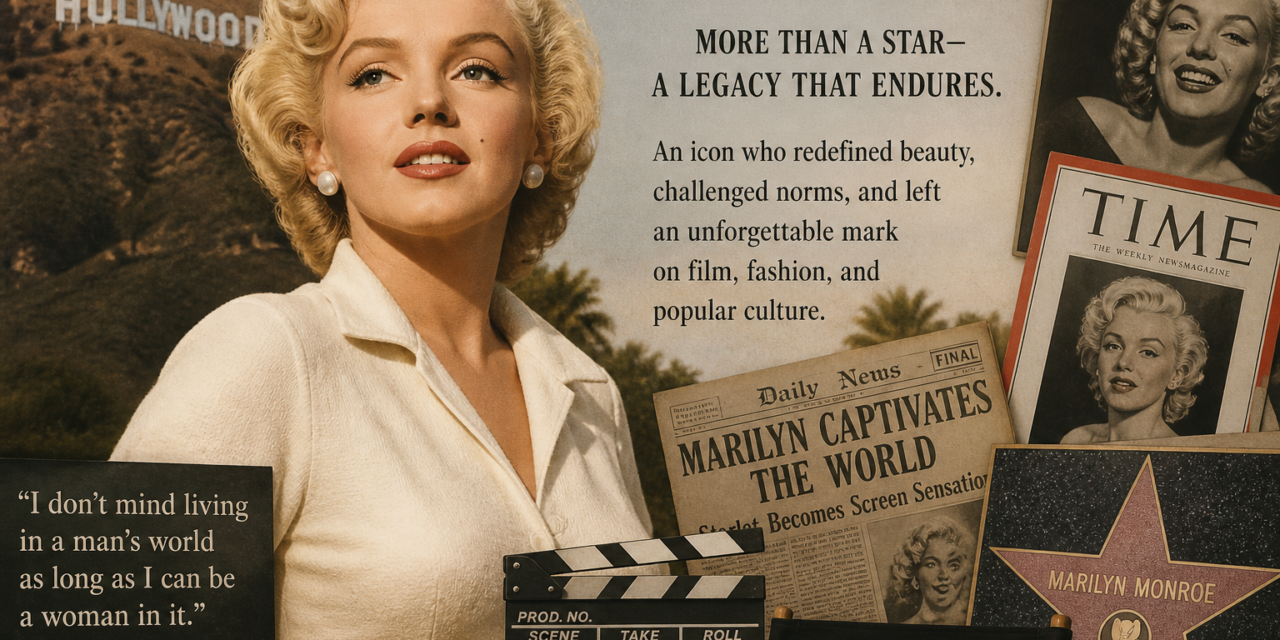
I was four years old, sitting in front of a television that was probably too big for the room and too small for what it was about to do to me. I don’t remember who put the movie on or why it was playing, only that suddenly she was there, alive in a way that felt completely different from everyone else on the screen. It was Marilyn Monroe in one of her films, bright, deliberate, impossible to ignore, and I remember going quiet in a way that had nothing to do with understanding the story. I didn’t follow the plot. I didn’t care about the other characters. I watched her.
At four, I didn’t have the language for desire or power or presence, but I felt something take hold of my attention and refuse to let go. She didn’t just exist inside the movie. She shaped it. Even then, I could sense that the camera belonged to her, that the people around her were reacting to her, adjusting themselves to match her energy. It was my first exposure to someone who didn’t simply participate in a scene but controlled it, and even as a child, I responded to that control without understanding why.
More Than Beauty
People have spent decades trying to reduce Marilyn Monroe into something manageable, usually by calling her beautiful and leaving it there. Beauty is easy to categorize. Beauty is passive. Beauty doesn’t threaten control. But Marilyn was never just beautiful, and that reduction says more about the people doing it than it ever did about her. When you watch her carefully, like in Gentlemen Prefer Blondes, what becomes obvious is that nothing she does is accidental. Her expressions, the pacing of her speech, the way she uses silence, all of it is deliberate. That famous “Diamonds Are a Girl’s Best Friend” performance is often talked about as spectacle, but what it really demonstrates is command. She knows exactly where every eye is and how to keep it there.
The Illusion of Male Control
What fascinates me now, looking back with an adult understanding, is how completely the men around her misread what was happening. Studio executives, directors, co-stars, all of them operated under the assumption that they were in charge because they controlled the structure of Hollywood. They believed that because they held contracts and power positions, they dictated outcomes. Marilyn understood something far more fundamental than any of them did. She understood that attention is currency, and desire is leverage. She didn’t fight the image they tried to impose on her. She absorbed it, refined it, and then turned it into something that worked for her. When she lowered her voice, men leaned closer. When she smiled, they softened. When she paused, they filled the silence with their own need to keep her engaged. She wasn’t reacting to them. She was setting the pace they followed.
Growing Up Under Her Influence
My own relationship with her image evolved in ways that feel almost inevitable. As a kid, I couldn’t name what I was responding to, but I felt it. There was a pull that didn’t come from plot or dialogue, something about the way she held herself that made everything else feel secondary. By the time I was old enough to understand desire, that pull had a different shape, but the structure of it hadn’t changed. It wasn’t just about wanting her. It was about recognizing that the wanting itself was part of what she created. Watching her in The Seven Year Itch, especially in that iconic subway grate scene, it becomes clear that she is fully aware of the effect she is producing. The smile is not accidental. The posture is not accidental. The moment is constructed, and the audience participates exactly the way she intends.
The Power of Vulnerability
What made Marilyn Monroe so effective, and so historically significant, is that she weaponized something most people misunderstand: vulnerability. She allowed softness to exist on the surface, even fragility at times, and that invited a very specific response from men. They wanted to protect her, to guide her, to feel like they were the stronger presence in the interaction. That instinct gave them a sense of control, but it was an illusion. By presenting herself that way, she shaped their behavior before they even realized they were reacting. She didn’t need to dominate through force or overt authority. She created an environment where others willingly gave up control because they believed they were gaining it.
Dominating History on Her Terms
Her dominance over history doesn’t look like conquest in the traditional sense, but it is no less real. She changed the way power could be expressed, especially for women operating inside systems that were built to limit them. Instead of rejecting femininity, she amplified it and demonstrated that it could be used strategically. She turned public fascination into a form of authority, one that studios could not fully control and audiences could not resist. Even her off-screen decisions, from negotiating her contracts to forming her own production company, reflect the same pattern. She understood her value, and she refused to let others define it for her.
Still Under Her Influence
I’ve spent years watching her performances, and they never feel dated in the way other films from that era sometimes do. There is something consistently present in her work, a level of awareness and intentionality that keeps pulling attention back to her. I still find myself studying the details, the timing of a glance, the way she shifts her tone mid-line, the subtle adjustments that change the entire energy of a scene. It doesn’t feel like I’m just watching an actress. It feels like I’m watching someone who understood exactly how to control the space she occupied.
That realization has never really let me go. Even now, there is a part of me that responds the same way I did the first time I saw her, drawn in without fully choosing it. The difference is that I understand it now. Marilyn Monroe didn’t just participate in the machinery of fame. She mastered it. She turned desire into something she could shape and direct, and in doing so, she made generations of people respond on her terms. That kind of influence doesn’t fade easily. It lingers, it repeats, and it continues to pull people in long after the moment has passed.












Hey bud, great post. Annie names some of hers too. It's 'Juan' that scares me the most...
Welcome chanel. We are around if you have questions.
Awesome article Levi. I remember hearing about the facesitting sitin - love that!
Welcome chanel and enjoy your stay,
love cfnm!