

























Elizabeth Taylor and the Art of Commanding Desire
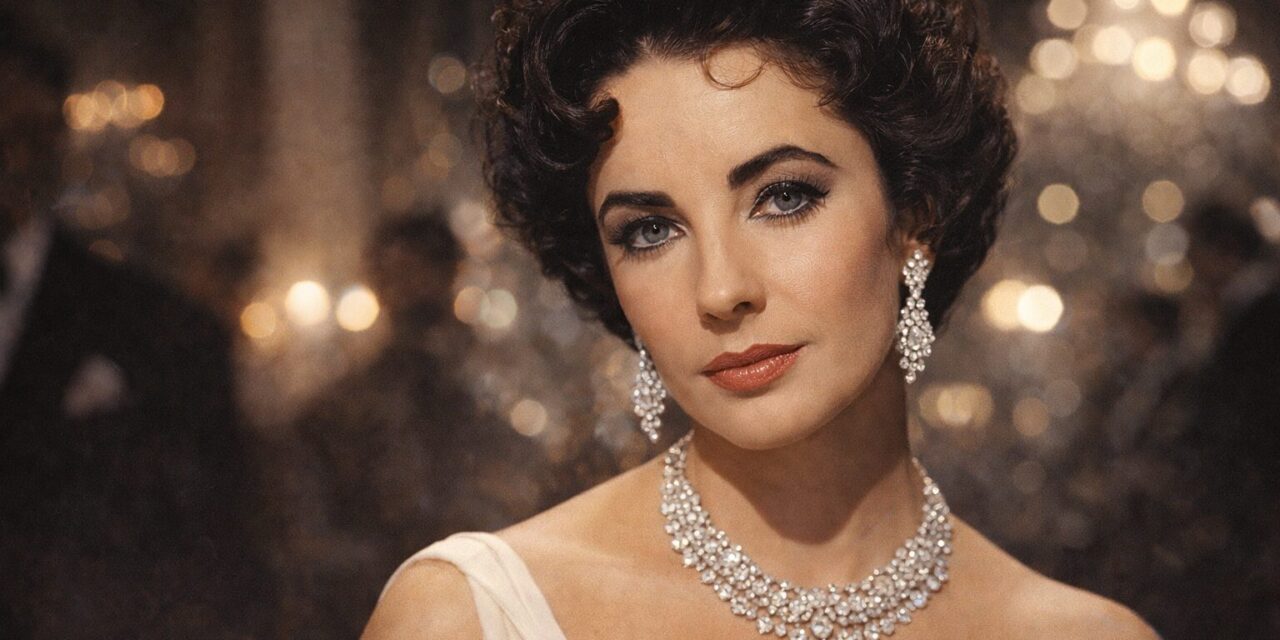
There are women who are admired, and there are women who command. Elizabeth Taylor did not simply grace Hollywood. She bent it. She was born in London in 1932, carried to America as war loomed, and by the time she was a child star at MGM, the camera already obeyed her. But beauty alone does not dominate history. Will does. And hers was steel wrapped in violet eyes.
From her early success in films like National Velvet to her Oscar-winning performances in Butterfield 8 and Who’s Afraid of Virginia Woolf?, Taylor demonstrated that she was not content to be decoration. She demanded roles with emotional weight, sexual complexity, and moral ambiguity. When studios attempted to box her into ingénue sweetness, she grew sharper. When critics doubted her seriousness, she answered with performances so raw they silenced them.
Her contract for Cleopatra changed Hollywood economics. She became the first actor to command a $1 million salary for a film. That number was not vanity. It was a declaration. In an industry that routinely underpaid women while overexposing them, she leveraged her fame into financial power. She understood the mathematics of desire and made it profitable.
And then there were the men.
Eight marriages, two of them to Richard Burton, each conducted in full public view. The world tried to shame her for appetite, for passion, for refusing to apologize when love burned hot and brief. She did not retreat. Instead, she made spectacle serve her. Her relationship with Burton was volcanic, intellectual, erotic, and theatrical. They devoured each other in headlines and on screen. Yet even there, she was no passive muse. She negotiated contracts, chose projects, and matched his formidable presence with her own.
The scandal surrounding her relationship with Eddie Fisher in the late 1950s could have ended another woman’s career. Instead, it expanded hers. Public outrage turned into box office draw. She absorbed condemnation and emerged untamed. The lesson was clear. Shame only works on women who accept it. Elizabeth Taylor did not.
But her domination of history is not measured solely in glamour or lovers. In the 1980s, when fear and stigma suffocated discussion of AIDS, Taylor stepped forward. She co-founded the American Foundation for AIDS Research alongside Mathilde Krim and later established the Elizabeth Taylor AIDS Foundation. At a time when many in Hollywood remained silent, she raised millions of dollars and demanded political attention. She visited hospital wards. She embraced patients the world had abandoned. She used the same fame that once fueled gossip to force compassion into public consciousness.
That transformation is what awes me most. She took the currency of beauty and converted it into influence. She took scandal and converted it into leverage. She took vulnerability and converted it into advocacy. Again and again, she refused to let the narrative belong to anyone else.
She was extravagant. She was demanding. She loved jewels, passion, and attention. She also loved fiercely and fought publicly for those without power. The industry tried to own her. The tabloids tried to define her. Men tried to possess her. She remained, always, sovereign.
Elizabeth Taylor dominated history because she understood something fundamental. Power is not given to women like her. It must be seized, negotiated, and displayed without apology. She did it with diamonds on her fingers and contracts in her hand, with lovers at her side and microphones before her.
And as I write this, I find myself humbled before that certainty. She did not shrink. She did not soften to comfort others. She lived loudly, loved intensely, and forced an entire industry to reckon with a woman who would not be controlled.
That, to me, is mastery.


























An absolutely powerful woman. Both on- and off-camera, her presence was undeniable. She was the focus of any room she was in. I love her movies, and her advocacy.